
PDP Optimization Framework to Increase Ecommerce Sales
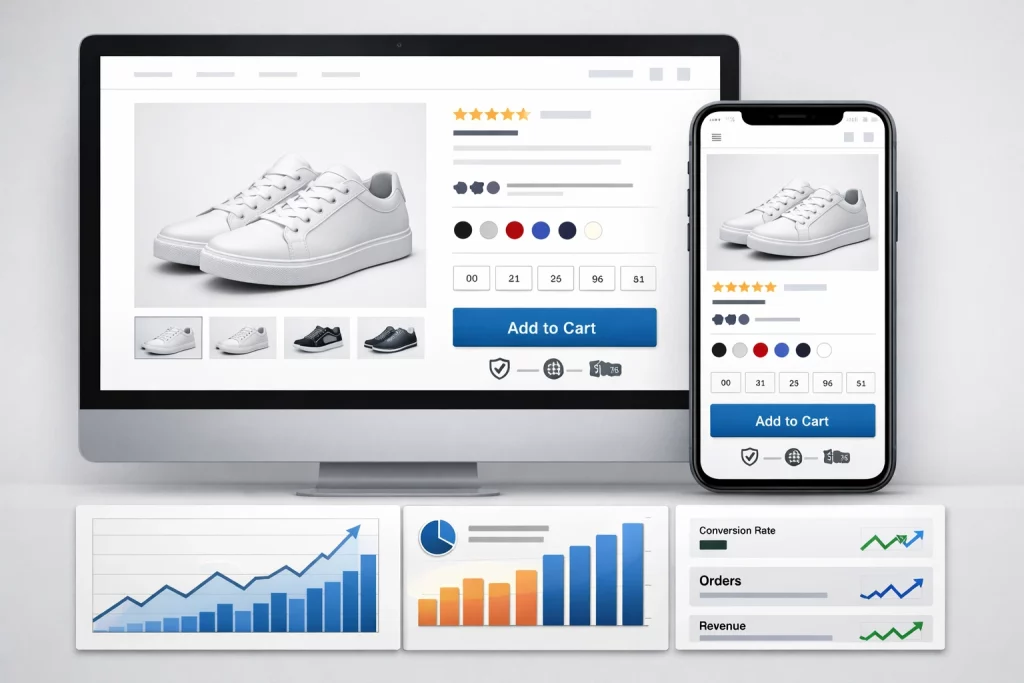
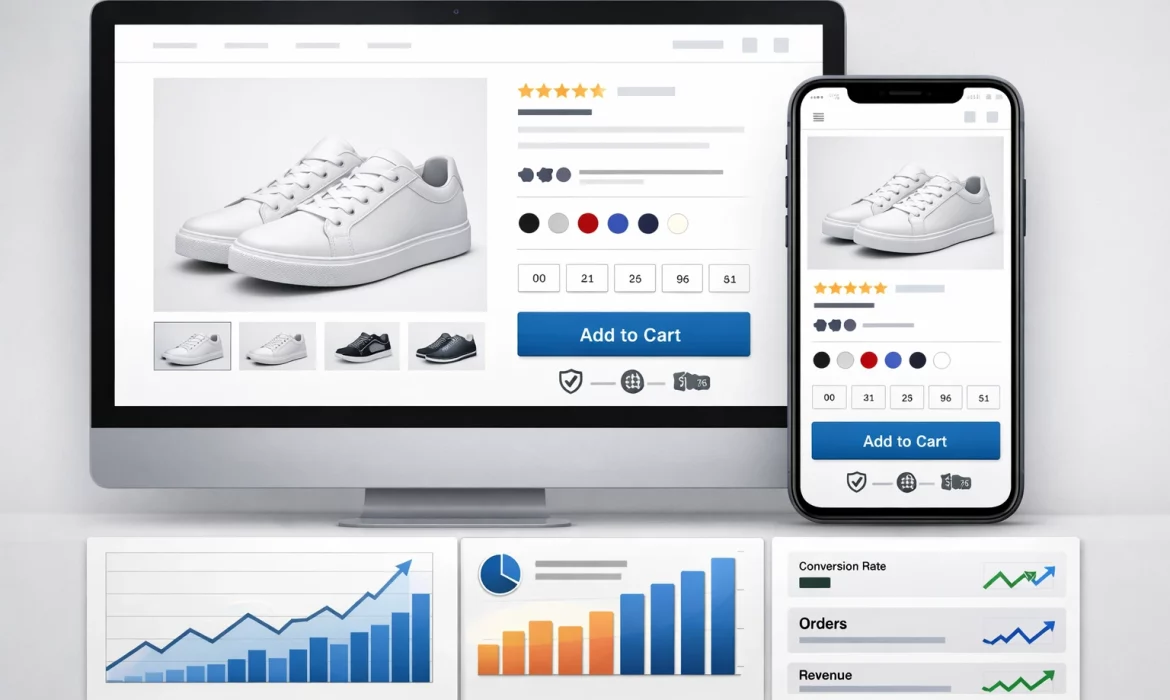
Summary: Product detail page optimization is not about changing button colors or adding more images. It is about reducing friction, building trust, and structuring information so buyers feel confident enough to act. A strong PDP optimization framework can significantly increase ecommerce conversion rate without increasing traffic.
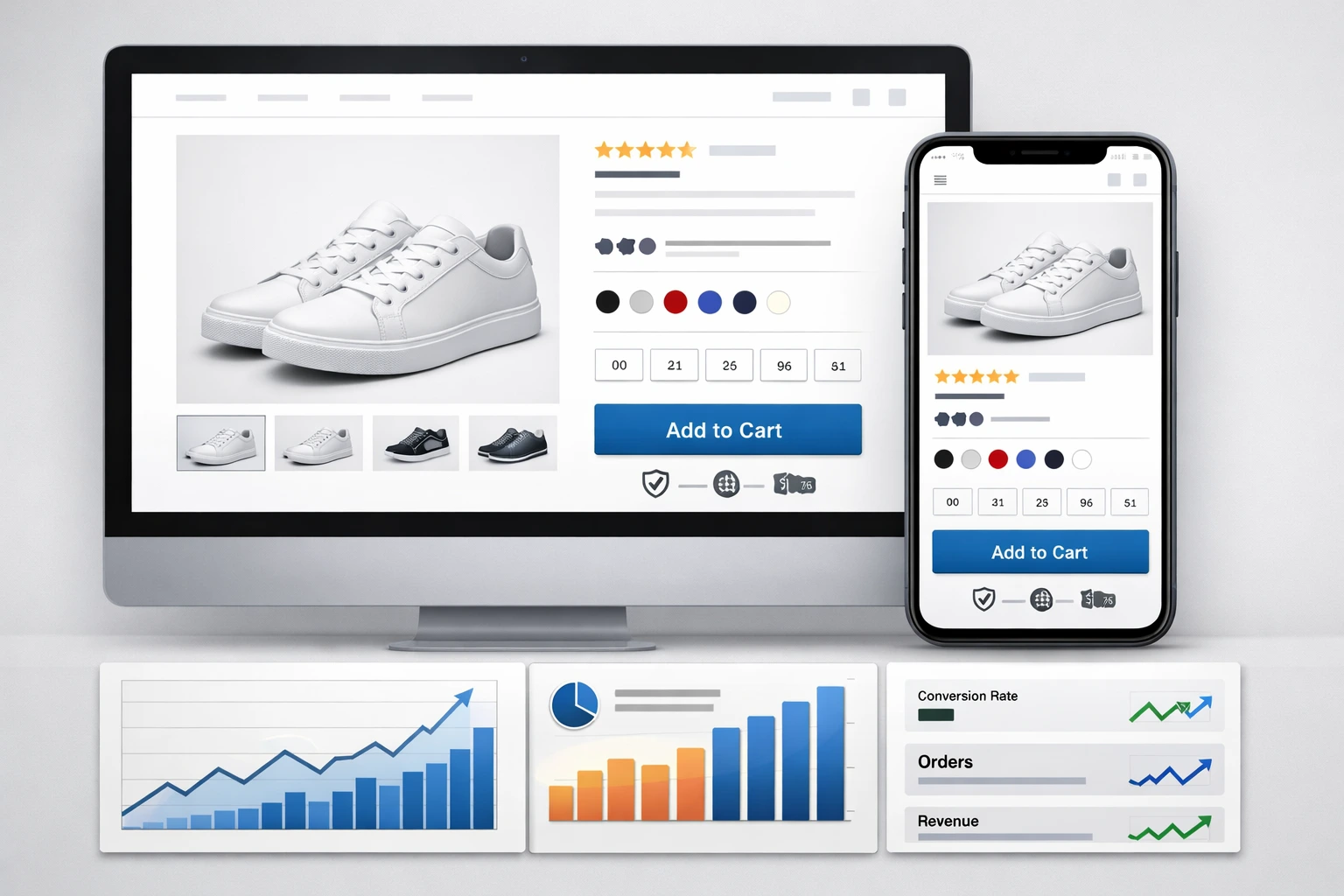
Every paid click, organic visit, and email campaign ultimately leads to a product page. If your product detail page fails to persuade, traffic becomes expensive noise.
Ecommerce product page optimization directly impacts add-to-cart rate, checkout completion, and revenue per session. Even small improvements on high-traffic products can unlock double-digit revenue growth.
PDP optimization is not a design decoration. It is a revenue system.
What Is Product Detail Page Optimization (PDP)?
Before diving into tactics, it is important to define what product detail page optimization truly means in an ecommerce context.
The Role of PDP Optimization in Ecommerce CRO Strategy
Product detail page optimization sits at the center of ecommerce CRO strategy. It bridges user intent and purchase action.
Visitors arrive with questions. A high-converting product page answers those questions clearly and quickly. When PDPs are structured correctly, the add-to-cart rate increases. When the add-to-cart rate improves, the overall ecommerce conversion rate improves.
Why Most Ecommerce Product Pages Fail to Convert?
Most PDPs fail because they overload users with information without guiding decision-making. Common issues include:
- Weak value proposition.
- Cluttered mobile layout.
- Hidden shipping or return policies.
- Generic product descriptions.
- Slow page speed.
When friction remains unresolved, hesitation grows. Hesitation kills conversions.
The 4-Pillar Product Detail Page Optimization Framework

To systematically optimize product pages, use a structured approach instead of random experimentation.
Pillar 1: Above-the-Fold Clarity and Friction Reduction
The above-the-fold area determines whether users scroll or leave.
A high-converting product page must include:
- Clear product title.
- Concise value proposition.
- Visible pricing.
- Immediate review summary.
- Shipping and return highlights.
- Prominent Add to Cart button.
On mobile, the Add to Cart button should remain accessible without forcing excessive scrolling. Product page UX optimization starts here.
Users decide within seconds whether to stay. Make those seconds count.
Pillar 2: Visual Storytelling and Rich Media Strategy
Modern ecommerce PDP design requires more than static product photos.
Effective ecommerce product page optimization includes:
- High-resolution product images.
- Lifestyle images showing product use.
- Short demo videos.
- Zoom functionality.
- 360-degree views where relevant.
Visual storytelling reduces uncertainty. When customers can imagine ownership, conversion improves. Rich media also improves engagement metrics, which, in turn, supports SEO.
Pillar 3: Trust, Social Proof, and Objection Handling
Trust is often the deciding factor in ecommerce purchases.
To improve product page conversion rate optimization:
- Place review summaries near the title.
- Highlight verified buyer badges.
- Show a combination of positive and constructive reviews.
- Add brand responses to common concerns.
- Include clear return and warranty policies.
Structured reviews build credibility. Transparent negative reviews build authenticity. Both together create confidence.
Improving trust directly improves the add-to-cart rate.
Pillar 4: Technical Performance and Personalization
Technical performance supports every other optimization effort.
Page load speed must be optimized through image compression, script management, and clean code structure. Slow pages reduce both conversion and search visibility.
Personalization also plays a role. Intelligent cross-sells and bundles increase average order value. When AOV increases, ecommerce growth becomes more sustainable.
Optimize product pages ecommerce-wide, not just for visual appeal but for performance stability.
Advanced PDP Optimization for Large Ecommerce Sites

Large ecommerce brands manage thousands of SKUs. Optimization must scale.
Template Governance and Scalable PDP Design
Enterprise ecommerce sites should rely on modular templates. Structured sections such as benefits, specifications, reviews, and FAQs should follow a consistent hierarchy.
This ensures brand consistency and scalable ecommerce PDP design across catalogs.
Personalization by User Segment
New visitors need reassurance. Returning visitors need speed and familiarity.
Segment-based personalization can dynamically adjust messaging, offers, and recommendations. This improves conversion without overwhelming first-time users.
Structured Data and Product Page SEO
Product detail page optimization must align with ecommerce product page SEO best practices.
Implement:
- Product schema
- Review schema
- Availability markup
- Breadcrumb schema
Structured data improves eligibility for rich results and strengthens search visibility.
Mobile-First Product Detail Page Optimization
Most ecommerce traffic is mobile. PDP optimization must reflect that reality.
Thumb-Zone CTA Placement
Primary CTAs must be reachable within thumb range. Buttons should not require awkward scrolling.
Accordion Content Strategy
Long descriptions should be organized in expandable sections. This keeps mobile layouts clean while preserving depth.
Mobile Speed and Core Web Vitals
Monitor Largest Contentful Paint and interaction delays. Mobile performance directly affects both conversion and ranking potential.
Mobile product page optimization is no longer optional.
Metrics That Matter in PDP Optimization
Optimization without measurement is guesswork.
Track:
- Add-to-cart rate.
- Product page conversion rate.
- Revenue per session.
- Scroll depth.
- Mobile versus desktop performance.
- Exit rate on PDP.
These metrics reveal whether your product detail page optimization framework is effective.
Focus on revenue impact, not just engagement.
A 7-Day PDP Optimization Sprint Framework
For quick implementation, follow a structured sprint.
Day 1: Audit top 10 revenue-driving products.
Day 2: Improve above-the-fold clarity.
Day 3: Upgrade product visuals.
Day 4: Strengthen trust placement.
Day 5: Enable express checkout options.
Day 6: Optimize speed and structured data.
Day 7: Review performance metrics and refine.
Small, focused changes compound over time.
Product Detail Page Optimization Checklist
Before scaling traffic, confirm:
- Is the value proposition clear immediately?
- Is the ‘Add to Cart’ button visible without confusion?
- Are reviews accessible and credible?
- Is the mobile experience smooth?
- Is structured data implemented?
Is performance monitored weekly?
Conclusion: Product Detail Page Optimization Is a Revenue System
Product detail page optimization is not a one-time redesign. It is a structured process that combines psychology, UX, performance, and SEO.
When PDP optimization is treated as part of a broader ecommerce CRO strategy, growth becomes predictable. Traffic converts more efficiently. Revenue per visitor increases.
At EvenDigit, we build scalable PDP optimization systems that align conversion, structured data, and user experience. For ecommerce brands looking to increase revenue without increasing ad spend, optimizing product pages is one of the highest-return investments.
Frequently Asked Questions About PDP Optimization
How long does product detail page optimization take to show results?
Small changes can show results within weeks. Larger structural improvements may take longer depending on traffic volume.
What is a good product page conversion rate?
Conversion rates vary by industry. Instead of chasing averages, focus on consistently improving your current baseline.
Should every product page have long descriptions?
Length should depend on product complexity and search intent. Structure matters more than word count.
Can PDP optimization improve SEO rankings?
Yes. Improved engagement, structured data, and better internal linking support organic visibility.
How do large ecommerce brands scale PDP optimization across thousands of SKUs?
Through modular templates, structured content blocks, and centralized governance systems.