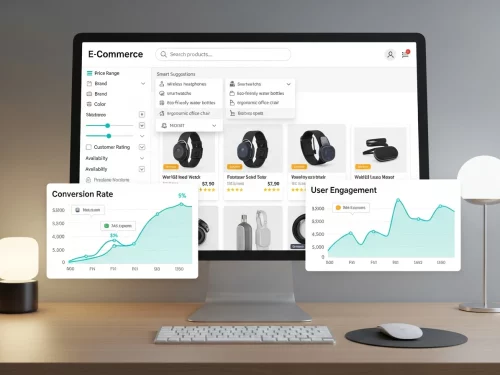
Conversion Optimization for Ecommerce Website: 18 Proven Ways to Turn Visitors into Buyers
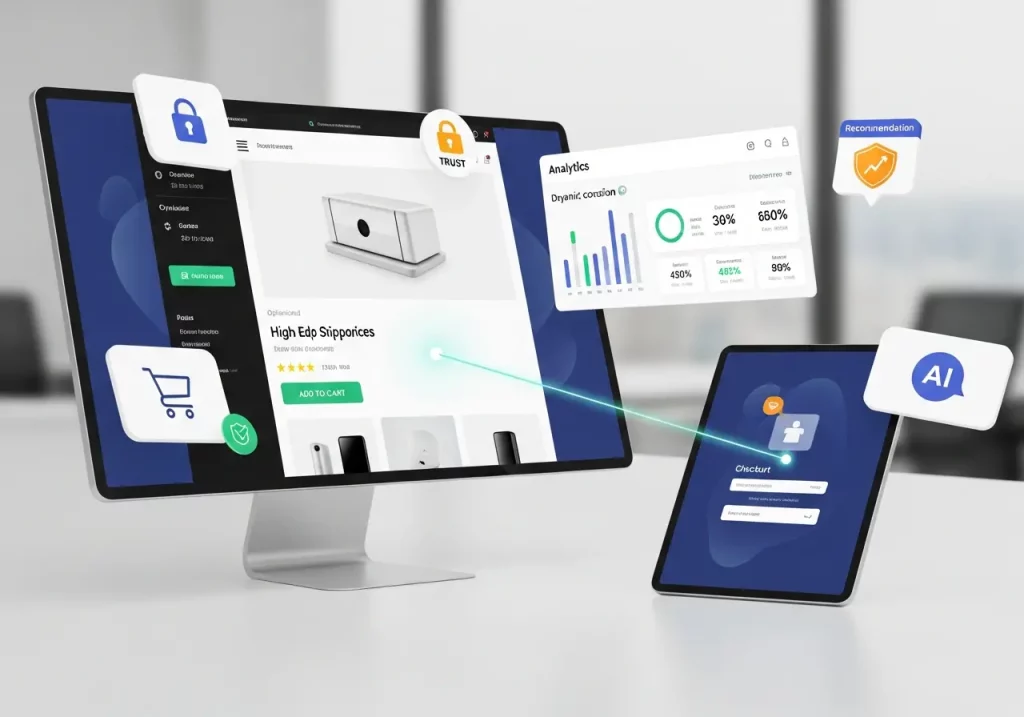

A high-traffic ecommerce website that struggles to convert isn’t broken, it’s under-optimized.
In ecommerce, growth doesn’t come only from acquiring more users. It comes from removing friction, building trust, and making decisions easier for the users already visiting your site. That’s exactly what conversion optimization for ecommerce websites is designed to do.
This guide breaks down 18 actionable ecommerce conversion rate optimization strategies grounded in UX research, real-world testing, and practical execution to help you increase sales without increasing ad spend.
Key Takeaways
- Ecommerce CRO is about reducing hesitation, not pushing users
- Small UX and behavioral fixes compound into major revenue gains
- Checkout, trust, and product clarity drive the biggest impact
- Advanced CRO goes beyond UX into data, AI, and post-purchase optimization
- A structured CRO system outperforms one-off fixes every time
What Is Ecommerce Conversion Rate Optimization?
Ecommerce conversion rate optimization (CRO) is the systematic process of improving your website so a higher percentage of visitors complete desired actions — primarily making a purchase.
The ecommerce conversion rate is calculated as:
Conversion Rate = (Conversions ÷ Total Visitors) × 100
But CRO is not just about improving a number. It’s about understanding:
- How users think
- Why they hesitate
- What information they need at each step
Better UX leads to better decisions and better decisions lead to more conversions.
What Is a Good Ecommerce Conversion Rate?
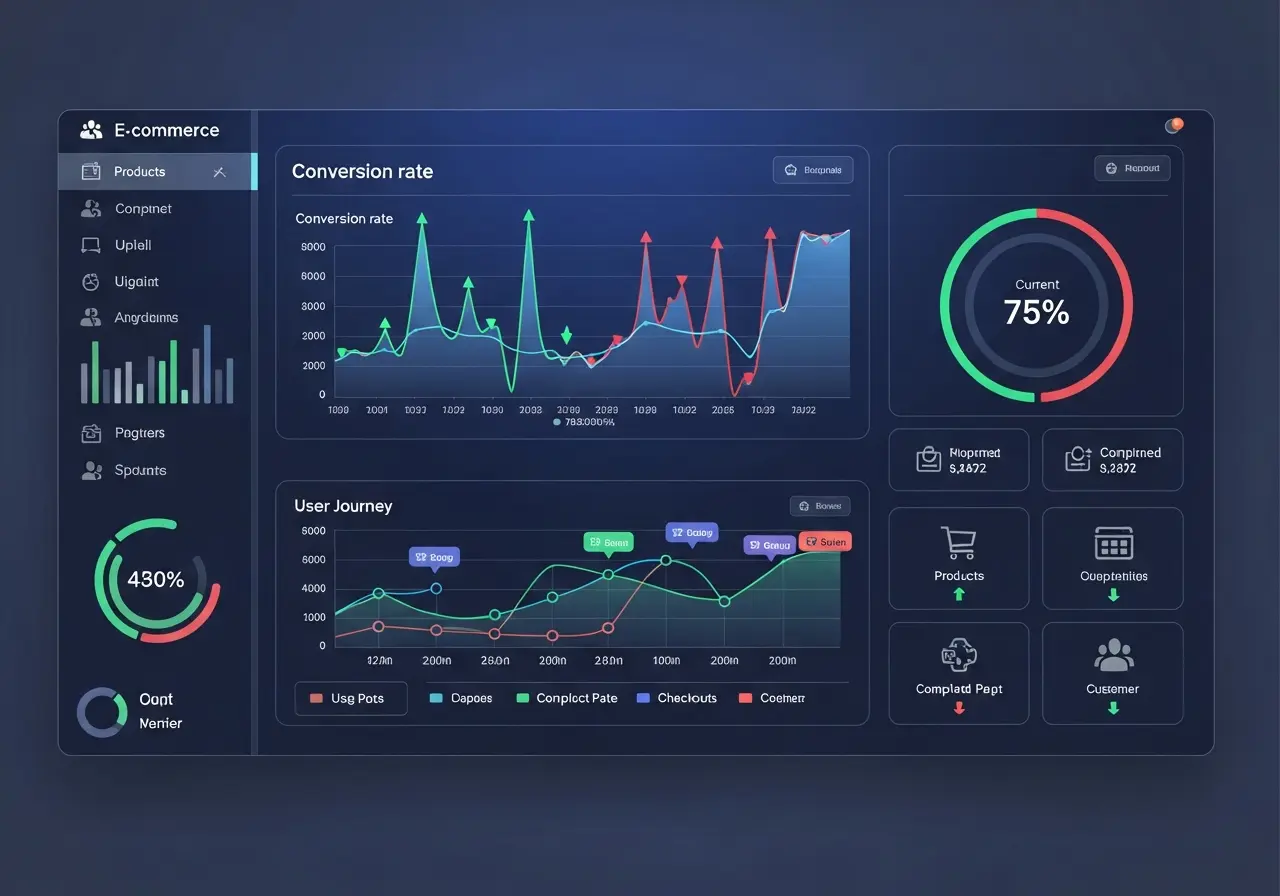
There’s no universal “good” conversion rate.
Why? Because conversion performance is shaped by:
- Industry
- Product complexity
- Price point
- Traffic quality
- UX maturity
What is consistent, however, is this:
No ecommerce site, not even Amazon gets everything right.
Conversion rate optimization is an ongoing process, not a destination. The goal is to make it progressively easier for customers to:
- Find the right product
- Understand its value
- Complete the purchase
- Come back again
18 Actionable Ecommerce Conversion Optimization Strategies
1. Optimize the Checkout Process
The checkout process is the most sensitive stage of the eCommerce funnel, where even highly motivated users can drop off if they encounter friction. A long or confusing checkout creates hesitation, increases cognitive load, and raises doubts around security and effort. Many users abandon carts not because of pricing or product issues, but because completing the purchase feels time-consuming or mentally exhausting.
From a CRO perspective, checkout optimization delivers one of the highest ROI improvements because it directly impacts ready-to-buy traffic. Baymard Institute’s research confirms this, showing that 18% of cart abandonments happen due to checkout UX issues alone.
This makes checkout optimization less of a design choice and more of a revenue necessity. The goal is to make the checkout feel effortless, predictable, and reassuring. Every extra click, field, or distraction increases the risk of abandonment.
2. Add Strong Trust Signals
In eCommerce, trust is formed in seconds, and most of it happens visually before a user consciously evaluates logic or policies. When shoppers reach key decision points, especially product pages and checkout their brain quickly scans for cues that signal safety and legitimacy. If those signals are missing or inconsistent, hesitation sets in, even if the brand is genuine.
This is why many users abandon carts based purely on a feeling that something doesn’t look right. From CRO experience, trust issues often don’t come from pricing or product quality but from subtle design and communication gaps.
Visual inconsistency, unclear payment messaging, or missing security indicators can silently reduce conversions. Strong trust signals reassure users that their data and money are safe. When trust feels established, users are far more likely to complete the purchase without second-guessing.
3. Clearly Display Product Reviews
Product reviews have become one of the most powerful trust and validation signals in eCommerce. Today’s shoppers rarely rely only on product descriptions or brand claims; instead, they look for social proof from real buyers before making a decision. In fact, studies show that up to 95% of users read reviews before completing a purchase, making them a critical element in conversion optimization.
Reviews reduce uncertainty, set realistic expectations, and help users justify their buying decision. When reviews are hidden, hard to find, or poorly displayed, users may assume the worst even if the product is high quality.
From a CRO standpoint, reviews act as silent salespeople, answering objections before they are even voiced. The closer reviews are to key decision areas, the stronger their impact on conversions. Visibility and clarity matter just as much as the reviews themselves.
4. Optimize for Mobile-First Experiences
Mobile traffic now accounts for the majority of eCommerce visits, yet mobile conversion rates still trail far behind desktop in many industries. This gap exists largely because most stores are still desktop-designed and mobile-adjusted, instead of being truly mobile-first. On smaller screens, every extra tap, delay, or confusing interaction feels amplified and quickly leads to frustration. Users expect mobile shopping to be fast, thumb-friendly, and intuitive, especially when browsing or checking out on the go.
From a CRO perspective, poor mobile UX doesn’t just reduce conversions, it actively leaks revenue from high-intent traffic. Slow load times, tiny buttons, or cluttered layouts create friction that mobile users simply won’t tolerate. Even minor usability issues can cause significant drop-offs. Optimizing for mobile-first experiences ensures that your store meets users where they are, not where you designed it originally.
5. Improve Product Photography
Product images play a critical role in replacing the physical experience of in-store shopping. Since users can’t touch, feel, or try products online, visuals become the primary way they evaluate quality, size, and suitability. Low-quality or limited images instantly create doubt and reduce trust, even if the product itself is excellent.
From a conversion rate optimization standpoint, product photography directly influences confidence and decision speed. Shoppers rely heavily on visuals to answer unspoken questions about materials, fit, finish, and real-world usage. Research shows that only 25% of eCommerce sites provide sufficient product imagery, which means most stores are missing a major opportunity to stand out.
High-quality visuals reduce return rates, improve engagement, and increase add-to-cart actions. Investing in better product photography often delivers measurable conversion lifts without changing pricing or messaging.
6. Simplify Checkout Forms
Checkout forms are one of the most common yet overlooked sources of conversion friction in eCommerce. Every additional field increases the time, effort, and mental load required to complete a purchase. Even small requests for unnecessary information can make users pause, rethink, or abandon the checkout entirely.
Industry data shows that most eCommerce checkouts require fewer than 8 fields, yet the average checkout still contains nearly 12, creating avoidable friction. From real-world CRO testing, form simplification consistently leads to higher completion rates and faster checkouts. Users want to complete purchases quickly, not fill out long forms.
The goal is not to collect more data, but to remove anything that doesn’t directly support order fulfillment. Fewer fields mean fewer errors, less frustration, and a smoother buying experience overall.
7. Label Required and Optional Fields Clearly
Unclear form requirements are a surprisingly common cause of checkout frustration. When users are unsure which fields must be completed, they often submit forms prematurely and encounter validation errors. These interruptions break momentum, increase cognitive load, and create unnecessary friction at a critical conversion stage.
From a CRO perspective, every error message is a micro-friction point that increases the likelihood of abandonment. Clearly labeling required and optional fields sets the right expectations upfront and helps users move through the checkout with confidence.
It also reduces back-and-forth corrections, especially on mobile devices where typing effort is higher. Small usability improvements like this often deliver meaningful conversion gains because they eliminate avoidable frustration. Faster, smoother checkouts directly translate into higher order completion rates.
8. Use Live Chat Carefully
Live chat can be a powerful conversion support tool, but only when it’s implemented with restraint and intent. When used correctly, chat helps users resolve last-minute doubts, clarify product details, or get reassurance before completing a purchase.
However, poorly timed or aggressive chat pop-ups often do more harm than good. Interrupting users while they’re browsing or filling out forms breaks focus and increases irritation, especially on mobile devices.
From a CRO standpoint, live chat should reduce friction, not introduce it. Data from real-world testing consistently shows that user-initiated chat performs better than forced interactions. Shoppers want help when they ask for it, not when it’s pushed onto them. The goal is to make support available without being intrusive.
9. Improve Website Navigation
Effective website navigation is critical to ecommerce conversion because it shapes how easily users can find the products they want. Even high-quality products can go unsold if users get lost or frustrated while browsing. Confusing menus, hidden categories, or excessive subcategories increase cognitive load and often lead to bounce or abandonment.
Navigation isn’t just about organization; it’s about guiding users intuitively through their shopping journey. Clear pathways, visible options, and logical groupings reduce friction and enhance the overall shopping experience. Users should never have to guess where a product is or how to get back to previous sections. From CRO testing across multiple ecommerce sites, stores with simple, predictable navigation consistently outperform cluttered competitors. This is particularly important on mobile, where users rely on quick scanning rather than deep menu exploration.
10. Make Shipping & Return Policies Easy to Find
Return and shipping policies are often overlooked, yet they are critical to reducing purchase anxiety and building trust. Many users abandon their carts simply because they are unsure about how returns work or what shipping costs and timelines look like. Research shows that 11% of users have abandoned purchases in the last quarter due to unclear return policies.
From a CRO perspective, providing easy-to-access, transparent shipping and return information reassures buyers that the transaction is low-risk. Users should never have to hunt for these details, whether they are on a product page, during checkout, or browsing the site.
Clear, visible policies improve confidence, reduce hesitancy, and ultimately increase conversion rates. Making this information accessible is a small UX effort that drives measurable revenue improvements.
11. Encourage Account Creation at the Right Time
Account creation can boost customer retention and long-term revenue, but forcing users to register before completing a purchase is a common conversion killer. Many first-time shoppers abandon carts when confronted with mandatory account creation, as it adds friction and creates a sense of commitment too early in the buying process.
The key is to offer account creation at the right moment, ensuring the primary goal completing the purchase remains effortless. Allowing guest checkout reduces anxiety, while post-purchase prompts explain the tangible benefits of creating an account, such as faster future checkouts, order tracking, and personalized recommendations.
From CRO experience, well-timed account creation prompts often lead to higher engagement without harming immediate conversion rates. This approach balances business objectives with the user’s natural buying flow.
12. Enable Search Within Categories
Search is one of the fastest ways for users to find what they need, but category-level search is often overlooked. When shoppers type queries on a site-wide search, they may receive irrelevant results that frustrate them, especially on mobile where screen space is limited.
Users expect that if they are browsing a specific category, the search should return results only within that category. Failing to provide this functionality can increase confusion, extend decision time, and lead to drop-offs, costing conversions.
From CRO testing, stores that implement intuitive category-level search consistently see higher engagement and add-to-cart rates. Additionally, mobile users benefit the most, as precise filtering and category search reduce unnecessary scrolling and cognitive load. Enabling category search demonstrates attention to user context, enhancing the overall shopping experience.
13. Streamline Mobile Payments
Mobile users expect fast, effortless payment experiences, but many eCommerce sites overwhelm them with too many options on small screens. When shoppers encounter a cluttered payment section, decision fatigue sets in, increasing the likelihood of abandonment. From a CRO standpoint, simplifying mobile payments ensures users can complete their purchase without hesitation or confusion.
Prioritizing the most popular payment methods, using clear labels, and minimizing scrolling all contribute to a smoother checkout flow. Mobile payment optimization isn’t just about reducing friction; it’s about instilling confidence in the transaction process. Even small improvements, like clearly highlighting the default payment method, can significantly boost conversion rates. Streamlined mobile payments also reduce errors and speed up transaction time, which is especially important for impulse purchases.
14. Hide Coupon Fields Behind a Link
While coupons and promo codes can incentivize purchases, prominently displaying empty coupon fields can unintentionally hurt conversions. Shoppers often pause to search for a code, feel they are overpaying, or abandon the cart if they don’t find one behavior known as “coupon hunting.” From a CRO perspective, the goal is to keep the focus on completing the purchase, not on discount anxiety.
Collapsing or hiding the promo code field behind a clickable link reduces distraction and ensures the primary checkout flow remains smooth. Users who have a code can still enter it, but it doesn’t dominate the attention of everyone else. Subtle changes like this often lead to measurable increases in conversion rates because they remove psychological friction without removing the incentive entirely.
15. Write Clear, Complete Product Descriptions
Product descriptions do much more than describe a product; they bridge the gap between online browsing and confident purchase decisions. Ambiguous or incomplete descriptions create doubt, which can quickly lead to exits or abandoned carts. Shoppers want to know exactly what a product is, who it is intended for, and whether it will meet their specific needs. High-converting descriptions answer these questions clearly and concisely, while also providing supporting details like materials, dimensions, compatibility, or care instructions. From CRO experience, well-written product descriptions reduce returns, improve customer satisfaction, and increase the likelihood of repeat purchases.
They also support SEO, as detailed descriptions help search engines understand and rank your products better. Clear product information empowers shoppers to act decisively and confidently.
16. Optimize Autocomplete & Search Accuracy
Search is a core component of product discovery, and users expect it to be fast, accurate, and forgiving. Poorly implemented autocomplete or search functions frustrate shoppers, often causing them to abandon the site when they can’t find what they need quickly. Misspellings, partial queries, or irrelevant suggestions can interrupt the shopping flow, especially on mobile devices where typing is slower.
From a CRO perspective, optimizing autocomplete ensures users feel guided and supported rather than blocked. Effective search functionality reduces cognitive load, keeps users engaged, and increases the likelihood of conversion. Prioritizing relevant, accurate suggestions not only speeds up discovery but also enhances trust in your brand’s digital experience. Fast, intuitive search contributes to higher add-to-cart rates and overall satisfaction.
17. Optimize for Revenue per Visitor (Not Just Conversion Rate)
While increasing conversion rate is important, focusing solely on it can be misleading. A high conversion rate on low-value purchases may generate less revenue than a slightly lower conversion rate on high-value transactions. Advanced eCommerce CRO shifts the focus from simple conversion percentages to Revenue Per Visitor (RPV), which combines both average order value (AOV) and conversion rate.
This perspective encourages strategies like upsells, cross-sells, bundling, and targeted post-purchase offers to maximize the value of each visitor. Mature brands use this approach to optimize overall profitability, not just raw transaction counts. By focusing on RPV, you can uncover hidden opportunities for revenue growth that traditional CRO metrics often miss. This mindset shift ensures that every optimization effort contributes meaningfully to the bottom line.
18. Use AI & Behavioral Segmentation for CRO
Modern eCommerce CRO has evolved beyond simple A/B testing and static website tweaks. High-growth brands now leverage AI and behavioral segmentation to deliver personalized, real-time experiences that significantly increase conversions. By analyzing user behavior, purchase history, and intent signals, AI can recommend the most relevant products, offers, and content to each individual shopper. Predictive product recommendations, personalized banners, and dynamic messaging adapt to the visitor’s context, increasing engagement and driving higher average order values.
This approach allows brands to optimize the shopping experience continuously and intelligently, rather than relying solely on manual optimizations or assumptions. Using AI and segmentation ensures that every visitor sees the right offer at the right time, improving both conversion rates and long-term customer loyalty.
How Softude Helps Brands Win with Ecommerce CRO
At Softude, we don’t treat eCommerce conversion optimization as a set of random UX tweaks. Instead, we design scalable CRO systems that transform how brands interact with their customers. Our approach combines deep UX research, advanced behavioral analytics, and AI-powered insights to deliver personalized, high-impact experiences. By continuously experimenting and optimizing based on revenue-focused KPIs, we ensure every visitor’s journey is frictionless and conversion-driven. This systematic approach allows brands to convert more without increasing acquisition costs, maximizing both immediate sales and long-term customer loyalty.
Whether it’s refining your checkout flows, improving product discovery, or leveraging AI for predictive recommendations, Softude’s CRO services help brands unlock hidden revenue potential and outperform competitors relying solely on traffic.
Conclusion
Conversion optimization for eCommerce websites is no longer optional. With rising ad costs and intense competition, CRO has become the fastest lever for sustainable growth. Brands that invest in structured, data-backed CRO strategies consistently outperform those that rely solely on traffic generation. Every improvement from checkout simplification to AI-powered personalization directly contributes to higher conversions, increased revenue, and better user experiences.
By following proven CRO practices and partnering with experts like Softude, brands can ensure that every visitor counts, every interaction matters, and every dollar spent drives measurable growth.
Ecommerce Conversion Rate Optimization FAQs
What is ecommerce conversion rate optimization?
It’s the process of improving an ecommerce website to increase the percentage of visitors who complete desired actions, such as making a purchase.
How long does CRO take to show results?
Initial improvements can appear within weeks, but meaningful gains usually come from 2–3 months of continuous testing.
Are ecommerce conversion optimization services worth it?
Yes especially for growing stores that need structured testing, deeper insights, and faster execution.
Which pages should be optimized first?
Start with product pages, checkout flows, and category pages, as they directly impact revenue.