
Meta Ads Campaign Blueprint for Lead Generation
Short Summary:
A high-performing Meta Ads lead generation campaign in 2026 requires a consolidated campaign structure, broad AI-driven targeting, creative-first testing, high-intent form filtering, CRM integration, and pipeline-level optimization. The goal is not just low cost per lead. The goal is a profitable cost per qualified opportunity.
Many advertisers focus on lowering cost per lead. That is the wrong metric. A well-structured Meta Ads campaign for lead generation must optimize for lead quality, pipeline conversion, and closed revenue. In 2026, Meta’s AI systems reward simplified structures, strong creative signals, and clean conversion data. This guide provides a complete campaign blueprint.
What Is the Best Campaign Structure for Meta Lead Generation?
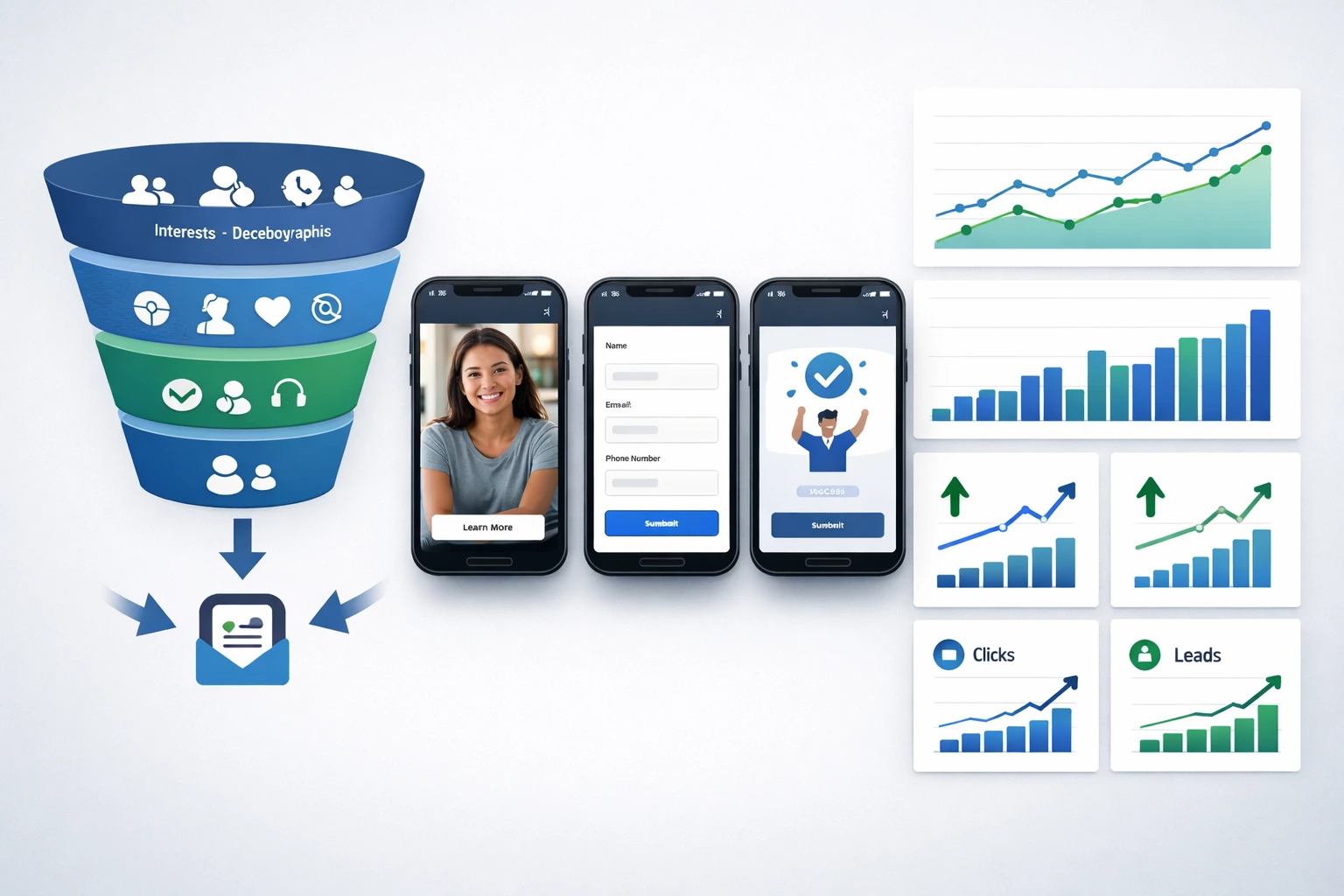
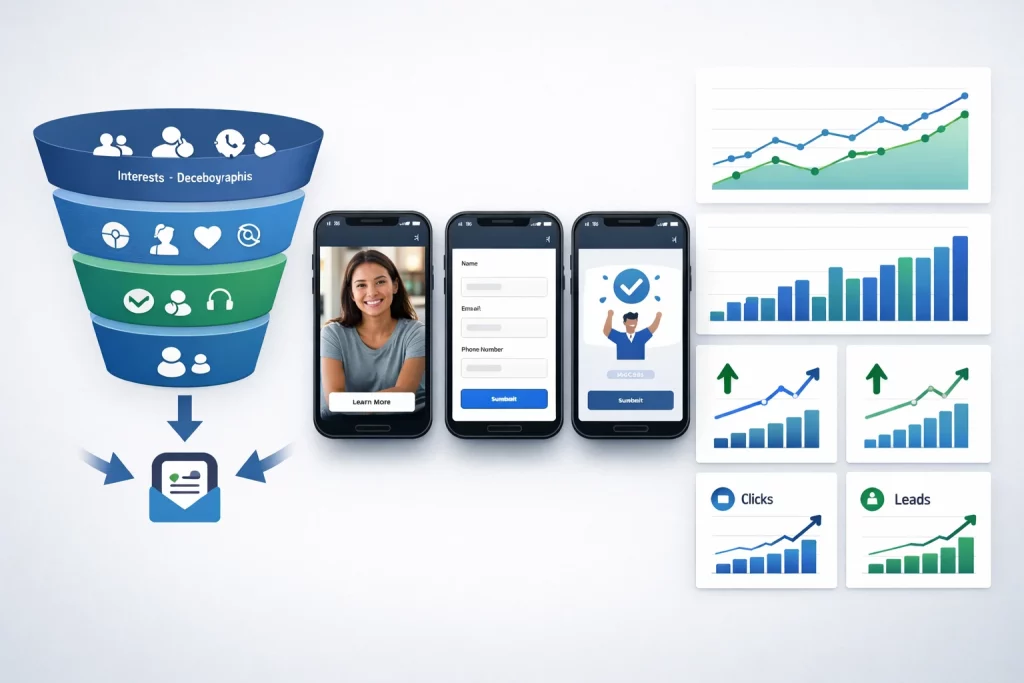
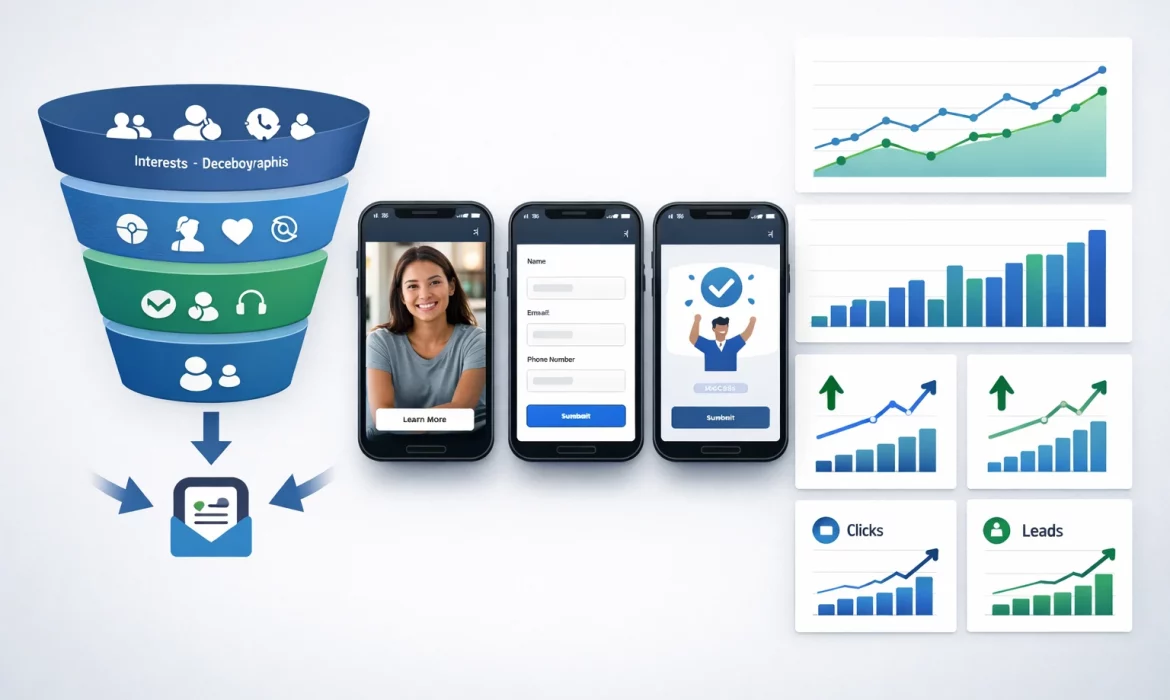
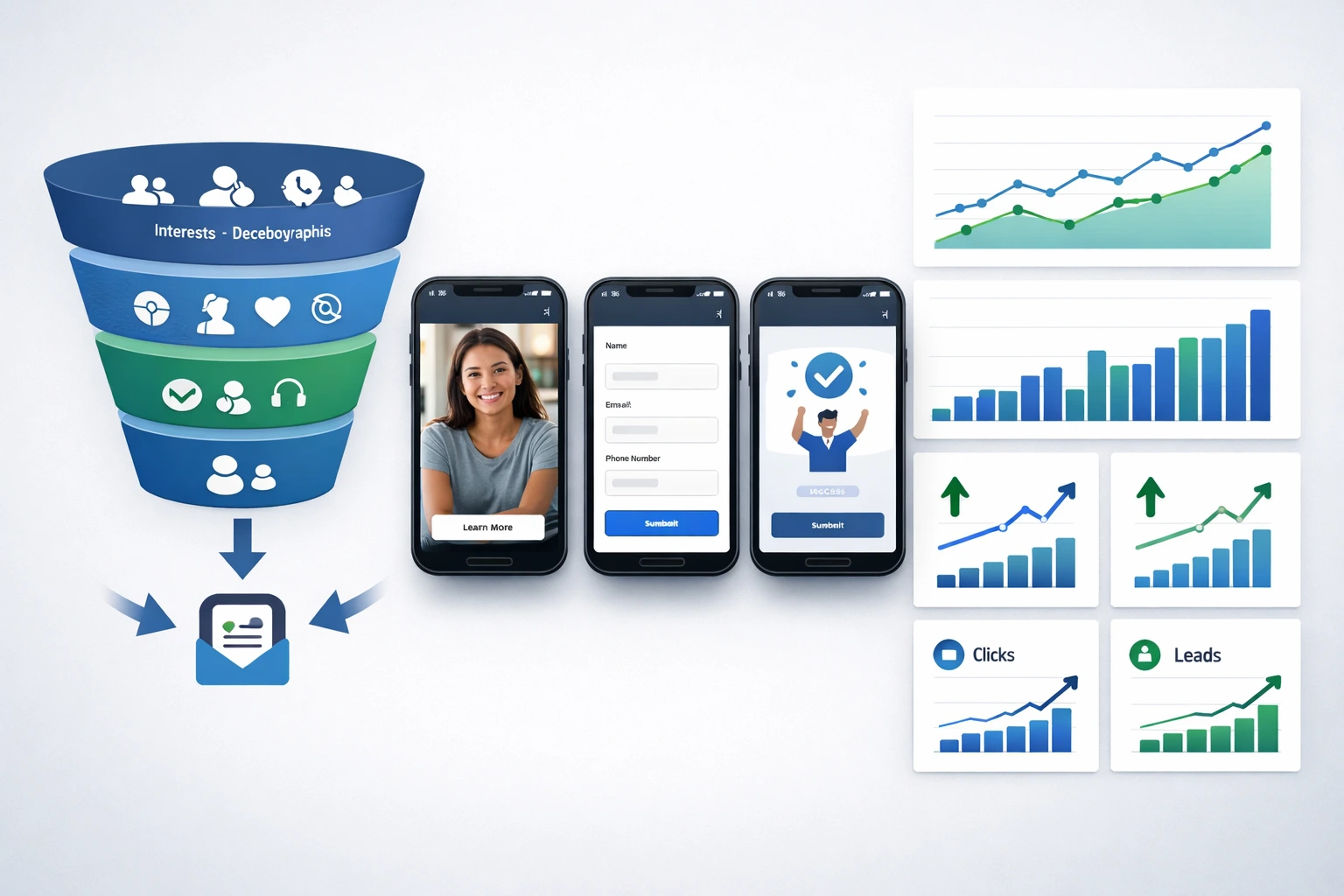
The best Meta Ads structure for lead generation uses a single consolidated campaign with the Leads objective, broad targeting via Advantage+ Audience, automated placements, and a robust creative testing system. Consolidation provides Meta’s AI with enough data to exit the learning phase faster and stabilize the cost per qualified lead.
Campaign Level: Objective and Budget Structure
Select the “Leads” objective.
Use the Advantage+ Campaign Budget to allow Meta to allocate budget dynamically across ad sets.
Recommended Setup
- Objective: Leads.
- Buying Type: Auction.
- Campaign Budget Optimization enabled.
- Start with at least $25 to $50 per day per audience cluster.
- Avoid creating too many small campaigns.
Meta performs better when campaigns are consolidated rather than fragmented.
How Should You Structure Ad Sets for Lead Generation?
Ad sets should focus on audience strategy, conversion location, exclusions, and placements. In 2026, broad targeting, supported by AI, often outperforms highly layered interest targeting.
Conversion Location: Instant Forms or Website?
Instant Forms generate higher lead volume because users stay within Meta’s platform.
Website conversions generate higher intent but may reduce total lead volume.
Choose Instant Forms when:
- Volume is priority.
- The audience is cold.
- The sales cycle is shorter.
Choose Website when:
- B2B leads are required.
- Qualification depth is high.
- Landing page is optimized.
Audience Targeting Strategy in 2026
Advantage+ Audience should be the default starting point.
Meta’s AI analyzes:
- Engagement behavior.
- Past conversion signals.
- Creative interaction patterns.
Alternative audiences:
- 1 to 3% lookalikes of the highest-revenue customers.
- Lookalikes of closed deals.
- Lookalikes of high LTV segments.
Avoid stacking too many narrow interests.
Exclusions
Always exclude:
- Existing customers.
- Recent lead submitters.
- Converted users.
- Unqualified segments if tracked in CRM.
This prevents budget waste.
Placements
Use Advantage+ Placements.
Manual placement control is rarely necessary unless performance data proves otherwise.
How Should You Structure Lead Forms for High Quality?
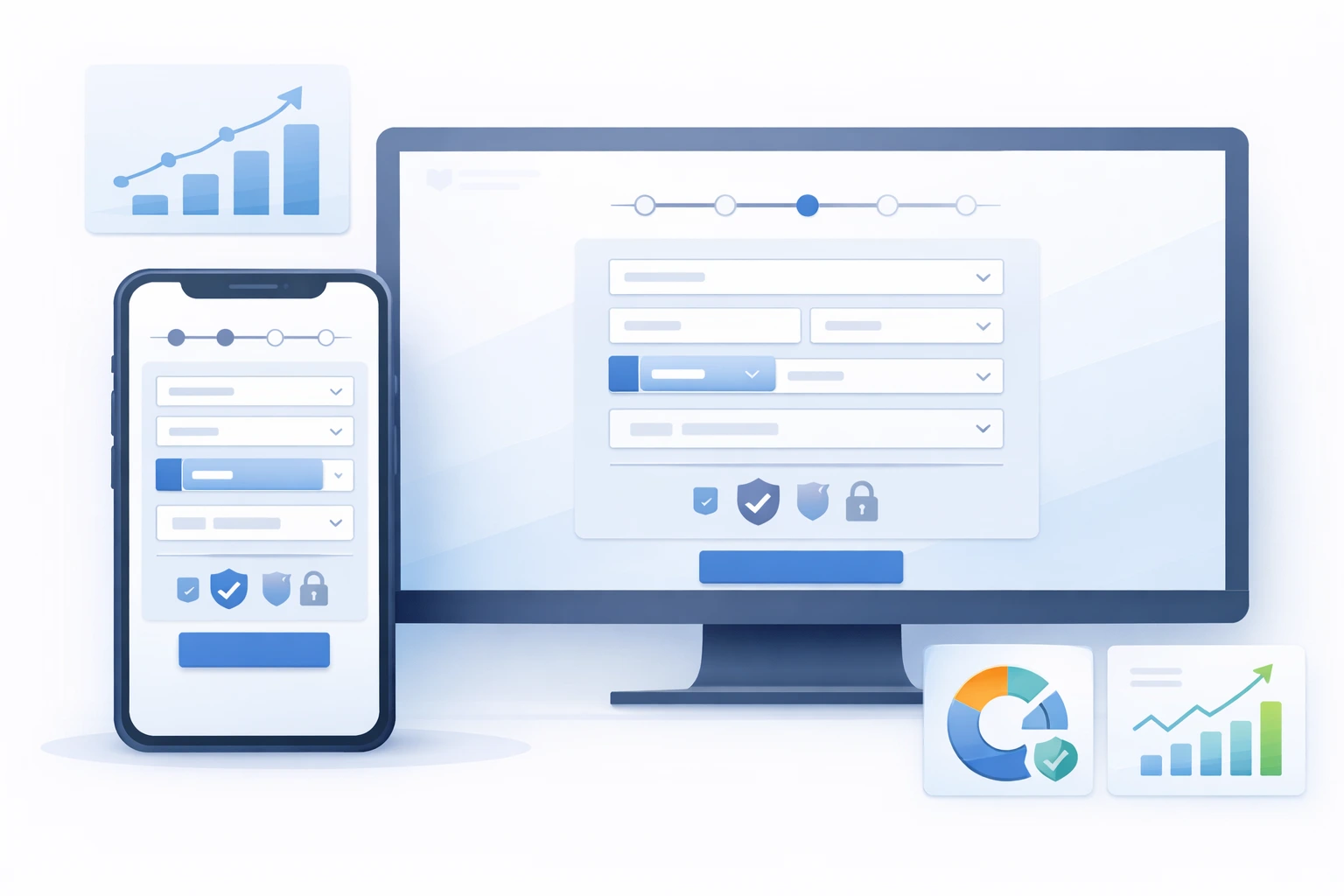
A Meta lead generation campaign is only as strong as its form quality. Low friction increases volume. High friction improves lead intent.
Use Higher Intent Form Type
Select “Higher Intent” to add a review step before submission. This reduces accidental submissions.
Limit Fields but Add Qualification
Best practice:
- Name.
- Email.
- Phone.
- One to two qualifying multiple-choice questions.
Avoid more than six total fields to maintain the completion rate.
Add Intent-Based Questions
Examples:
- Budget range.
- Timeline to purchase.
- Service type required.
Qualifying questions filter out low-quality prospects early.
SMS Verification and Fraud Control
Enable phone verification when possible.
Combine with CRM-based filtering to reduce spam.
What Is the Ideal Creative Structure for Lead Generation?
Creative drives performance in 2026 more than targeting.
Meta’s algorithm optimizes based on engagement and conversion signals from the creative.
Recommended Creative Angles
Test at least five angles:
- Problem and solution.
- Case study or testimonial.
- Founder story.
- Comparison.
- Offer-based urgency.
Video performs better than static in most cases.
Creative Testing Framework
Test multiple variables:
- Hook in the first three seconds.
- Opening headline.
- Value proposition.
- Call to action.
- Visual style.
Aim to test at least 20-30 creative variations per month, if budget allows.
Monitor:
- Cost per lead.
- Click-through rate.
- Lead form completion rate.
- Cost per qualified lead.
How Do You Measure True Lead Quality?
Cost per lead is incomplete. Optimize for cost per qualified opportunity.
Lead Quality Formula
Cost per Closed Deal = Ad Spend ÷ Closed Deals.
If 100 leads produce 5 closed deals, your effective cost per acquisition is based on those 5 deals, not the 100 leads.
Pipeline Conversion Metrics
Track:
- Lead to Marketing Qualified Lead rate.
- MQL to Sales Qualified Lead rate.
- SQL to the closed rate.
- Revenue per lead.
Campaign optimization must reflect downstream conversion.
How Should You Scale a Meta Lead Generation Campaign?
Scaling requires tracking stability, data volume, and marginal efficiency.
Learning Phase Rule
Meta suggests at least 50 conversions per week per campaign.
If this is not possible:
- Consolidate ad sets.
- Merge similar audiences.
- Increase the budget gradually.
Scaling Strategy
To scale safely:
- Increase the budget by 15-20% every 3 days.
- Duplicate winning ad sets only when saturation occurs.
- Monitor marginal cost per lead.
Do not rely solely on blended metrics.
How Does CRM Integration Improve Performance?
Meta lead generation becomes significantly more powerful when integrated with CRM systems.
Conversions API Implementation
CAPI ensures accurate event tracking.
Benefits:
- Improved attribution.
- Better AI optimization.
- Stronger signal quality.
Closed-Loop Optimization
Import offline conversion data into Meta.
Create custom audiences based on:
- Closed deals.
- High-value clients.
- Lost opportunities.
This improves lookalike audience quality.
What Is the Ideal Meta Lead Generation Funnel Structure?
Effective campaigns use layered architecture.
Funnel Structure
Cold Campaign:
- Broad audience.
- Creative testing.
Warm Campaign:
- Video viewers.
- Form openers.
- Website visitors.
Hot Campaign:
- High-intent retargeting.
- Offer reinforcement.
This structure improves efficiency over time.
Summary Checklist for 2026 Meta Lead Generation
| Element | Best Practice |
| Campaign Structure | Consolidated with CBO |
| Audience | Advantage+ broad or high-value lookalikes |
| Placements | Advantage+ automated |
| Creative | 20 to 30 variations per month |
| Lead Form | Higher intent with qualification |
| Tracking | CAPI mandatory |
| Optimization | Focus on qualified leads, not raw CPL |
| Scaling | Increase the budget gradually |
Verdict
A Meta Ads campaign for lead generation is not just about launching a form. It is about building a structured system that connects creative testing, AI optimization, CRM feedback, and pipeline economics. In 2026, success depends on lead quality, not just volume.
At EvenDigit, we structure Meta lead-generation campaigns around contribution margin, qualified-opportunity tracking, and closed-loop optimization. That is how lead generation becomes predictable and profitable.
Frequently Asked Questions
What is the best objective for Meta lead generation?
Use the Leads objective with either Instant Forms or Website conversion, depending on lead intent depth.
Should I use Instant Forms or landing pages?
Instant Forms generate higher volume. Landing pages generate higher intent. Choose based on sales cycle and qualification needs.
How many creatives should I test per month?
Testing 20 to 30 variations per month provides a strong signal of diversity for Meta’s AI.
What is a good cost per lead on Meta?
There is no universal benchmark. Evaluate cost per qualified opportunity and cost per closed deal.
How do I improve lead quality on Meta?
Use higher intent forms, qualifying questions, CRM filtering, and closed-loop optimization with offline conversion imports.