
Demand Generation vs. Demand Capture: Key Differences & Strategy Guide 2026

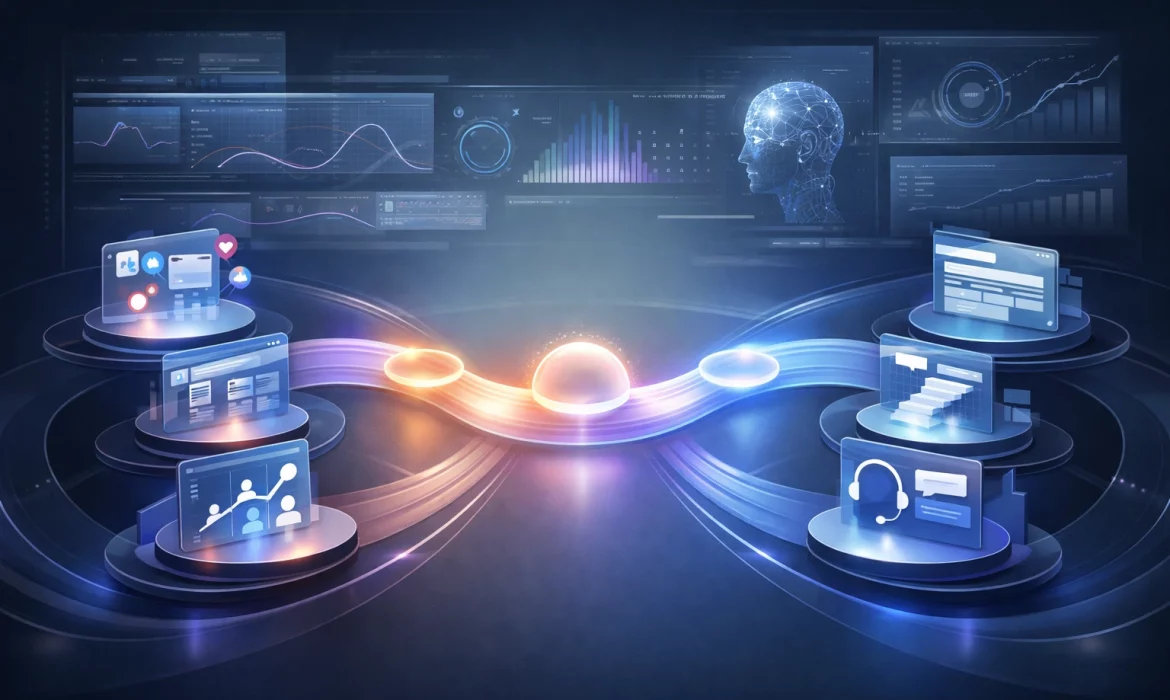

Most marketing teams do not have a lead problem; they have a demand mix problem. In the current landscape, revenue volatility is almost always tied to a fundamental misunderstanding of how a pipeline is actually built.
Some over-rely on capturing demand by bidding on high-intent keywords or chasing prospects already in-market might bring a few leads now, but not forever. When the pool of active buyers is exhausted, Customer Acquisition Costs (CAC) will increase.
Similarly, focusing much on demand generation creates a “brand famous” company that doesn’t understand how to turn its traffic into revenue, resulting in high engagement but empty pipelines.
What to do? First, clear the basics. Understand how demand generation and capture differ, and what the right strategy is for each.
What is Demand Generation (And Where Does It Actually Fit in the Funnel?)
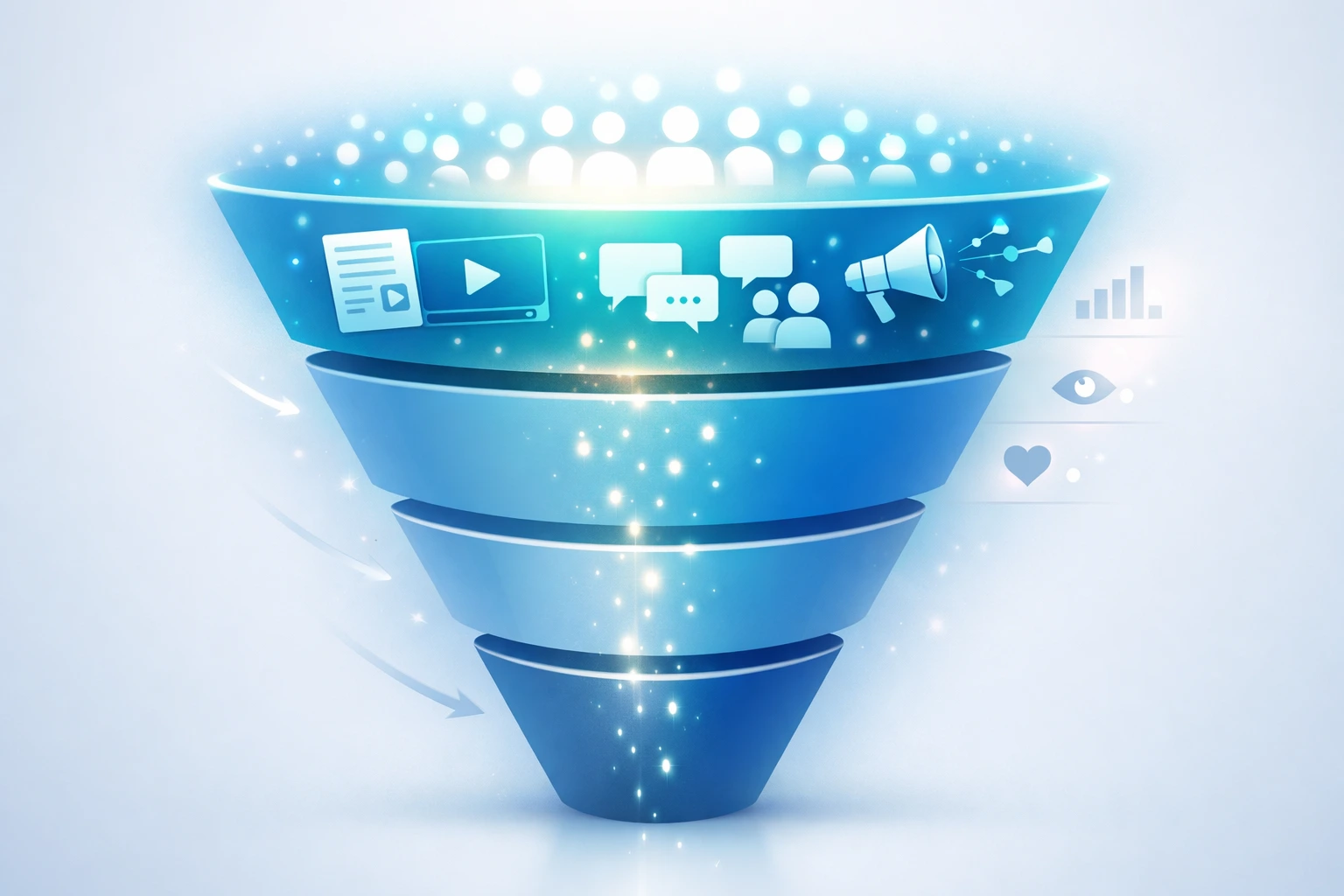
Demand generation is the strategic process of creating awareness and building interest before a buyer begins an active search. It involves expanding the Total Addressable Market (TAM) by educating prospects on unsolved problems or surfacing “cost of inaction” scenarios. It is not about selling a product; it is about creating a demand.
Where It Fits in the Funnel
While traditionally categorized as Top-of-Funnel (TOFU), demand generation also fits in the mid-funnel stage, deciding how buyers will eventually judge your product or service.
Key Insight: Demand generation doesn’t push people into the funnel; it creates the funnel.
Why Demand Generation Matters More in 2026
The buyer journey has moved into the “Dark Funnel.” Prospects research independently via AI search engines, private Slack communities, and peer networks.
This shift is especially visible in B2B demand generation, where buyers rely heavily on peer insights and independent research.
By the time a buyer performs a Google search, they have likely already shortlisted their top three vendors. In other words, if a buyer doesn’t think of you when they have a problem, you don’t exist.
Benefits of Demand Generation
- Reduces Long-Term CAC: Organic pull is significantly cheaper than paid push over time.
- Improves Lead Quality: Educated buyers convert faster because the “Why change?” and “Why us?” questions were answered months ago.
- Increases Branded Search: Strong generation drives prospects to search for your company specifically, bypassing competitor ads.
Strategies for Generating Demand for Your Product or Service
In 2026, demand isn’t built by publishing more content or running generic awareness campaigns. It’s built by shaping how your audience understands their problem and positioning your brand as the natural solution before they even start comparing options. A strong demand gen strategy focuses on shaping buyer perception long before they enter the market. Here are the proven strategies that will work for your business.
-
Lead with Problems, Not Products
If your messaging starts with your product, you are only speaking to buyers who are already solution-aware. The majority of your market is still trying to understand their problem.
Demand is created when you meet buyers at that stage. Instead of pushing features, focus on the questions they are already asking. When you consistently address their concerns, you position your brand as the first place they turn to for clarity, not just a vendor.
-
Build a Consistent Content Engine, Not One-Off Campaigns
Demand generation doesn’t come from short bursts of activity. It comes from sustained visibility over time. Publishing a few blogs or running a campaign for a month may create spikes, but it doesn’t build recall.
A consistent content engine ensures your brand shows up regularly across formats and channels. Over time, this repetition builds familiarity, and familiarity builds trust. That’s what moves buyers from passive awareness to active consideration.
-
Win on Distribution, Not Just Creation
Creating valuable content is only half the job. If it doesn’t reach your audience, it doesn’t create demand.
Brands that win are not necessarily the ones creating the most content, but the ones ensuring it gets seen repeatedly. This means actively using platforms like LinkedIn for generating leads, repurposing content into multiple formats, and placing your insights where your audience already spends time. Visibility, not volume, is what drives demand.
-
Optimize for AI Search, Not Just Traditional SEO
Buyers are no longer relying only on search engines; they are increasingly turning to AI tools for answers. This changes how content is discovered.
To stay visible, your content needs to be structured in a way that AI systems can easily interpret and reference. Clear answers, well-defined sections, and focused topic coverage increase your chances of being surfaced in AI-generated responses. The goal of this demand gen strategy is not to rank on search engines, but to become a trusted source that AI platforms pull from.
-
Use Point-of-View-Led Content to Stand Out
In crowded markets, neutral content gets ignored. Buyers are exposed to similar advice across multiple brands, and generic messaging doesn’t create recall.
What cuts through is a clear point of view. When you take a stance, challenge common assumptions, or present a different way of thinking, you give your audience something to remember. This doesn’t just attract attention; it builds credibility and trust, which are essential for generating demand.
-
Activate the Dark Funnel
A large part of the buying journey happens in places you can’t track, private conversations, internal discussions, and closed communities. This is often referred to as the “dark funnel.”
Even though it’s not directly measurable, it plays a critical role in shaping decisions. When your ideas are being discussed in these spaces, you are influencing demand without seeing it in your analytics. Being present in relevant communities and creating content that people want to share privately helps you tap into this hidden layer of demand.
-
Educate the Market, Not Just Promote Your Product
Demand increases when your audience becomes more informed, not when your product becomes more visible.
By simplifying complex topics, explaining industry shifts, and providing actionable insights, you help your audience better understand their challenges. Over time, this positions your brand as a trusted advisor. When buyers reach the decision stage, they are far more likely to choose a brand that has already helped them think clearly.
-
Leverage Video to Build Trust Faster
While written content is effective for building awareness, video accelerates trust. Seeing and hearing expertise make your message more relatable and easier to absorb.
Short-form videos, quick insights, and explainers help you communicate ideas more engagingly. They also increase the likelihood of your content being consumed and shared, which further expands your reach and strengthens demand.
-
Collaborate to Expand Reach and Credibility
Demand grows faster when you connect with audiences that already exist. Collaborations allow you to tap into established trust networks instead of building everything from scratch.
Partnering with industry experts, creators, or complementary brands helps you reach new audiences while also strengthening your credibility. When your brand is associated with trusted voices, it reduces friction in the buyer’s decision-making process.
-
Align Messaging Across Every Touchpoint
Demand weakens when your messaging is inconsistent. If your website, ads, and content communicate different ideas, it creates confusion and slows down decision-making.
Consistency ensures that every interaction reinforces the same problem, positioning, and value. Over time, this repetition builds strong brand recall, making your business easier to remember and trust when the need arises.
How to Track Demand: KPIs to Track
To measure demand generation, look at Brand Health indicators rather than immediate conversions. These metrics indicate whether your demand gen strategy is actually creating market pull.
| KPI | What it Measures | Why it Matters in 2026 |
| Branded Search Volume | Total searches for “[Your Brand Name]” | The ultimate proxy for brand awareness. If this is growing, your generation is working. |
| Direct Traffic Growth | Users typing your URL directly. | Indicates you are “top of mind” and not reliant on search engines for discovery. |
| Dwell Time & Scroll Depth | Engagement on ungated long-form assets. | High dwell time on a 3,000-word POV piece signals that you are shifting buyer mindsets. |
| Share of Voice (SoV) | Your brand’s mentions vs. competitors. | Proves your narrative is dominating the market conversation. |
| Pipeline Influence | % of closed-won deals that consumed “Gen” content. | Connects non-conversion content to actual revenue without using “last-click” logic. |
Demand Generation Tactics for 2026
- Problem-Led Content (AEO + GEO): Optimizing for Answer Engines and Generative Engines by providing the most authoritative, data-backed answers to industry pain points.
- Social Ecosystems: Founder-led and team-led LinkedIn thought leadership that prioritizes a unique Point of View (POV) over corporate updates.
- Educational Video: Short-form tactical insights for discovery and long-form strategic sessions for deep-level trust.
- Niche Communities: Active participation in gated groups (WhatsApp, Slack) where buyers seek unbiased peer advice.
Tools:
Ahrefs (SEO), SparkToro (Audience Insights), LinkedIn (Distribution), HubSpot (Nurture).
What is Demand Capture (And Where It Fits in the Funnel)
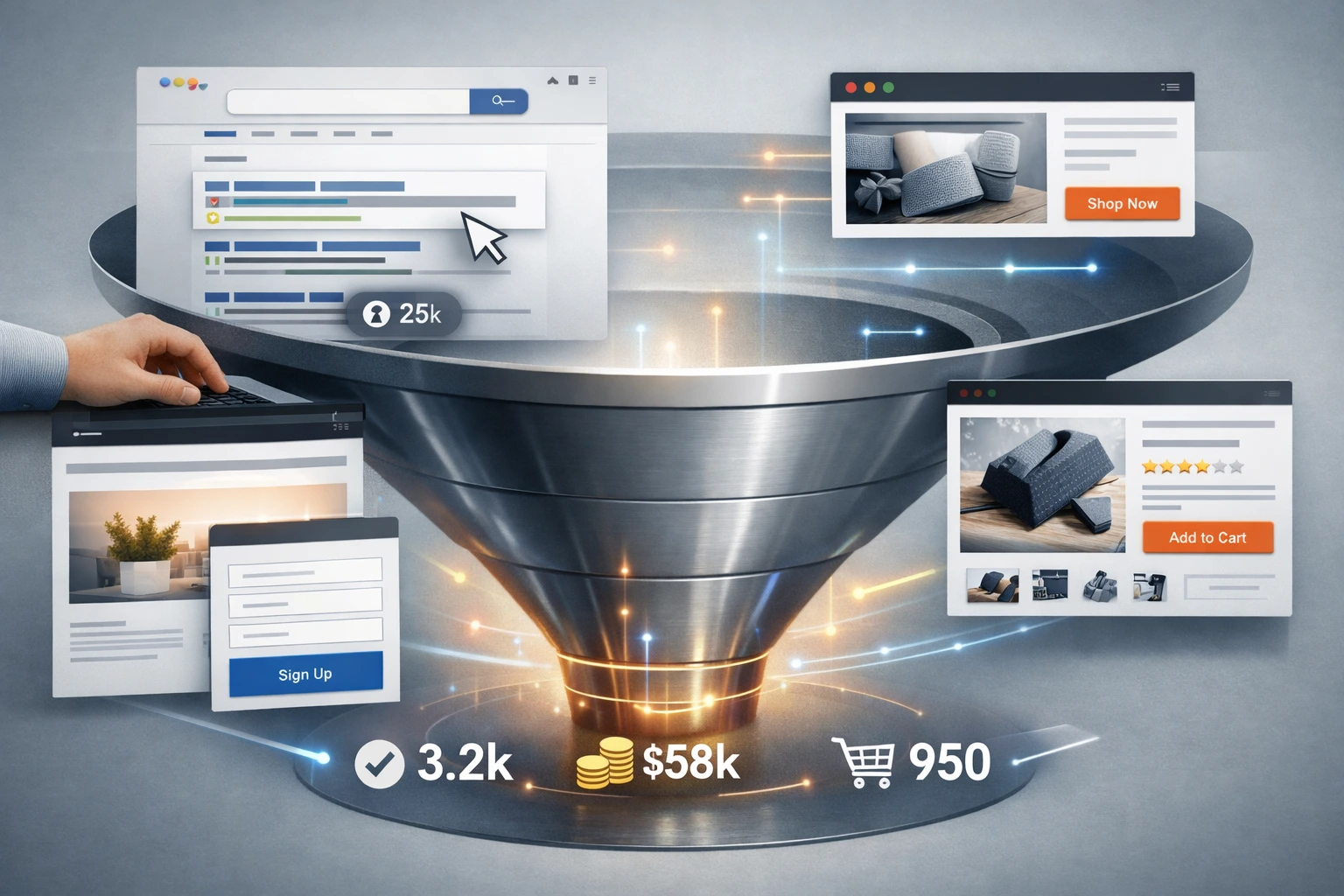
Demand capture is the process of converting existing market intent into measurable leads and revenue. It targets the “active” 5% of the market that is currently looking for a solution. A strong demand-capture strategy ensures that existing market intent is efficiently converted into revenue.
Where It Fits in the Funnel
Demand capture lives in the Mid-to-Bottom Funnel (MOFU/BOFU). At this layer, buyers are either comparing or buying products/services/solutions.
Why Demand Capture is Still Critical in 2026
While generation builds the future, capture funds the present. It provides an immediate pipeline, direct revenue attribution, and ensures that the demand created by your brand (or even your competitors) doesn’t go to waste.
The Best Strategies for Capturing Demand
An effective demand capture strategy in 2026 requires precision across targeting, messaging, and the conversion experience. Here’s what can be best for your business.
- Signal-Based Keyword Segmentation
Stop bidding on high-volume, low-intent terms. Focus exclusively on “Category + Vendor” or “Problem + Solution” strings.
Build dedicated landing pages for “Alternative to [Competitor]” queries. These should be objective, data-heavy, and focused on feature-set gaps.
- Hyper-Personalized Retargeting Loops
In 2026, generic “Come back and buy” ads are ignored. If a prospect visits your pricing page but doesn’t convert, serve them a video testimonial from a customer in their specific industry. This is where a smart demand capture strategy moves buyers from consideration to confidence.
- Frictionless Conversion Architecture
Any friction in the capture phase is a lost deal. Replace standard lead forms with Qualified Booking Bots. Use enrichment tools (like Clearbit or 6sense) to instantly identify the user, and if they meet your ICP (Ideal Customer Profile), offer a live calendar link immediately.
What to Track
Capture metrics are focused on Efficiency and Throughput. They are largely binary: did they convert, and at what cost?
| KPI | What it Measures | Why it Matters in 2026 |
| Conversion Rate (CR) | High-intent page visits to demo requests. | Measures the effectiveness of your landing page copy and UX. |
| Customer Acquisition Cost (CAC) | Total spend / New customers. | The primary health metric for your capture engine’s profitability. |
| Pipeline Velocity | How fast a “captured” lead moves to “Closed-Won.” | High-intent capture should result in faster sales cycles than cold outreach. |
| Cost Per Lead (CPL) by Channel | The efficiency of Google Ads vs. Review Sites. | Allows for real-time budget reallocation to the highest-performing capture intent. |
| Sales Acceptance Rate (SAR) | % of captured leads Sales actually wants to call. | If this is low, your “capture” is grabbing low-quality “noise” rather than the intent. |
Quick Glance: Demand Generation vs. Demand Capture
| Feature | Demand Generation | Demand Capture |
| Time Horizon | Long-term (Compounding) | Short-term (Immediate) |
| Cost Curve | Decreases as Brand Grows | Increases with Competition |
| Audience Stage | Unaware / Problem Aware | Solution / Brand Aware |
| Scalability | Theoretically Infinite | Limited by Market Search Volume |
| Primary Goal | Create a Buyer | Capture a Sale |
How to Balance Both
Too much capture leads to “plateauing,” where you cannot buy more leads without losing profitability. Too much generation leads to a “revenue lag” that can starve a business of the cash flow needed to survive.
Practical Budget Split (By Growth Stage)
- Early Stage: 70% Capture / 30% Generation (Focus on survival and product-market fit).
- Growth Stage: 50% Capture / 50% Generation (Scaling the engine).
- Mature Stage: 40% Capture / 60% Generation (Defending the category and driving organic growth).
Signs Your Balance is Off
- Rising CAC: You are under-investing in generation; the market doesn’t know you, so you’re overpaying for clicks.
- Low Lead Quality: Your generation messaging is weak; people are clicking, but don’t understand the value.
- High Traffic, Low Conversions: Your capture infrastructure (landing pages, sales flow) is broken.
What Should You Do Next?
The companies winning in 2026 are not choosing between demand generation and capture strategy; they are engineering how both work together.
Diagnose your bottleneck today:
- No leads? Fix your capture engine (Ads, BOFU SEO, CRO).
- Expensive leads? Invest in generation (POV content, Community, Brand).
- Inconsistent growth? Rebalance your budget and align your sales and marketing teams around Pipeline Velocity, not just lead counts.
FAQs
Are demand generation and demand capture the same?
Demand generation creates a brand-new appetite for a solution where none existed. Demand capture harvests the appetite that is already present in the market.
Which is better: demand generation or demand capture?
Neither. Capture provides the ROI needed to fund Generation, while Generation provides the volume needed to keep Capture affordable.
How do you measure demand generation?
Look for increases in branded search volume, direct website traffic, and a decrease in blended CAC.
Why is my CAC increasing?
In 2026, increasing CAC usually means you are over-competing in capture channels (like Google Ads) without enough brand equity to drive organic conversions.
How much should I spend on demand generation?
A mature B2B firm should aim for a 60/40 split in favor of generation to ensure long-term category dominance.
How B2B demand generation is different from lead generation?
B2B demand generation builds long-term brand interest and market authority, whereas lead generation focuses narrowly on capturing contact information for immediate sales follow-up.